The first time I sailed out from Dubai Marina under a bruised, silver sky, the captain laughed and called it “movie weather.” He was right. The glass towers softened, the water shifted from gem-blue to slate, and the lights along the promenade flickered earlier than usual. People talk about a Dubai marina cruise as if it is only a sunset postcard. When the clouds roll in and the rain starts lightly tapping the canopy, the experience turns cinematic, intimate, and surprisingly smooth if you know what to expect.
This guide draws on years of booking, hosting, and riding during the city’s rare wet spells. Dubai averages a handful of rainy days clustered between November and March, with the odd summer squall from sea fog or convection. Storms tend to be short, often 20 to 60 minutes, sometimes arriving right before boarding or halfway into dinner. Operators in the Marina know the drill. They plan for rain, wind, and visibility changes, and they do more than shrug. If you’re eyeing a Dhow Cruise Dubai marina experience and wondering what happens when the weather flips, here’s how it really unfolds.
How often does it actually rain in Dubai Marina?
Not often, but often enough that reputable operators have clear wet weather policies. Over a year, think roughly a dozen to two dozen rainy episodes, most light. You won’t face the monsoon conditions you might see in other regions. Instead, expect passing showers or, a few days a year, a proper thunderstorm with gusts that prompt the Coast Guard and the Port Authority to issue advisories. The waters inside the Marina are sheltered by the urban canyon of towers and the breakwaters near JBR. That shelter matters. It allows many cruises to proceed safely in drizzle or light rain even when the open sea looks unruly.
A quick operational truth: most Dubai marina cruise decisions hinge not on rain itself, but on wind speed, lightning activity, and wave height beyond the breakwater. Light rain with calm wind usually means you’ll sail. Heavy wind or electrical activity can halt all departures across the board.
What the operator checks behind the scenes
When clouds gather, the best Dhow Cruise Dubai teams don’t improvise, they run checklists. Dispatch talks to captains already on the water. Crew leaders walk the top decks and re-check canopy tie-downs. Managers refresh marine forecasts from the National Center of Meteorology and port notices. I’ve watched captains pull up radar loops on their tablets and wait five minutes to see a cell’s path before deciding whether to board.
On dhows and modern glass boats, inflatable life rafts, life jackets, and fire suppression systems are standard, rain or shine. Wet weather triggers a few extras: non-slip mats laid by stairwells, a reminder to keep upper decks partly closed until the rain passes, and a discreet reroute plan to stay within calmer sections of the Marina channel if gusts rise. None of this feels dramatic on board. It’s quiet competence, and you can feel it in the way the crew keeps service moving without skipping safety cues.
Will your Dubai marina cruise be canceled?
Here’s the honest breakdown. Light rain, normal wind, good visibility: your cruise probably sails. Moderate rain, patchy wind, no lightning: many operators run with minor adjustments, such as a covered top deck and slightly slower speed. Thunderstorms, whitecaps inside the Marina, high wind warnings: expect a postponement or cancellation, often at short notice because conditions can shift quickly within 30 minutes.
What does that mean for you? Book with a provider whose policy promises a free reschedule or a full refund if the cruise cannot safely depart. Most reputable Dhow Cruise Dubai marina operators already do this, but policies vary, especially for promo fares. If the forecast looks dodgy on the day, contact the operator two to three hours before departure to confirm status. They often queue a plan B departure time 60 to 90 minutes later, banking on Dubai’s quick-clearing showers.
If your cruise sails in the rain, what changes on board
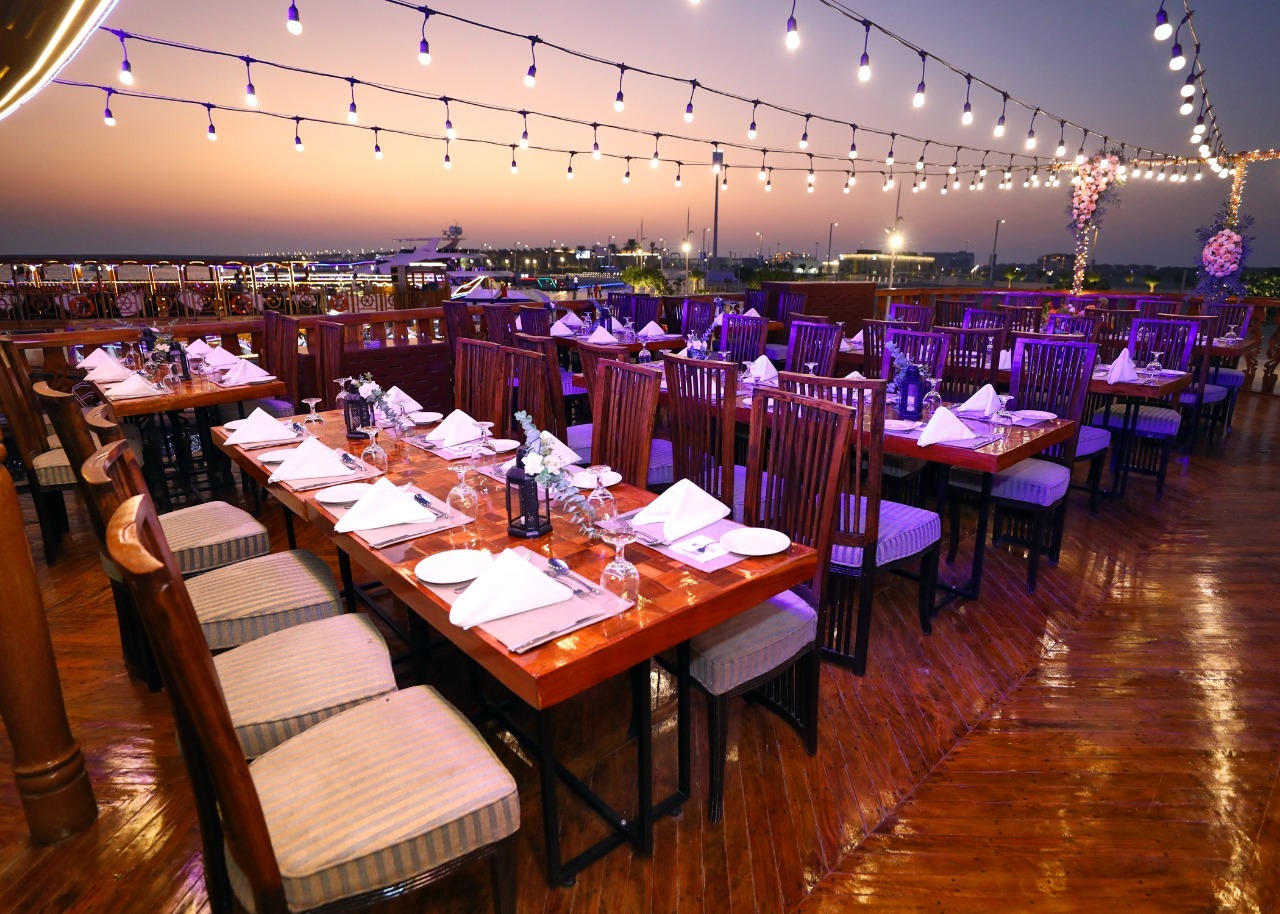
You still board at the usual pier near Pier 7 or Marina Mall, depending on your operator. Crew greet you under a canopy, and they’ll usually welcome guests onto the lower deck first to keep everyone dry during embarkation. Live music and buffet service remain, but with tweaks. Drinks get served from stations set inside rather than on the outer rail. Starters come plated to minimize back-and-forth traffic during wet patches. Upper deck seating stays open when the rain is light, thanks to awnings and transparent side panels that can be rolled down. If it starts to pour, the team ushers guests down in sections, so no crowding on the stairs.
On traditional dhows with timber decks, the crew spreads non-slip sections near the bow and by stair landings. The scent of wet teak adds to the atmosphere. On glass boats, the experience turns into a floating conservatory, with reflections of the skyline ricocheting off the rain-dappled windows. Either way, the Marina’s neon canopy looks richer against a darkened sky, and the city’s color palette sharpens like a film set.
The view is different, not worse
On clear evenings, the Marriott, Cayan Tower’s twist, and the Ain Dubai wheel outline neatly against a peach sunset. In rain, you get a different show. Puddles on the promenade throw back streaks of electric pink and cyan from shop signs. You’ll see reflections travel across the ripples as if the water is breathing color. The upper floors of the towers, slightly fogged, glow warmer than usual. The cameras come out, but more people watch with their eyes, which makes conversations feel unhurried.
I remember a drizzly December sailing where thunder teased in the distance without coming closer. The violinist switched to softer, longer phrases, and the chef sent a round of hot mezze earlier than planned. People settled into the rhythm of the rain. Couples leaned in. A family from Muscat stood by the roll-down panel on the top deck and counted lightning flashes behind the Palm, a safe, far-off light show. When we docked, a dozen guests stayed back to thank the crew, which doesn’t happen as often on perfect-weather nights.
Dining during a wet cruise
Buffets in the Marina are built for throughput, with two lines mirrored for flow. On a wet night, the crew often opens one side at a time to avoid congestion and slick spots. It’s not slower by much, since the kitchen tends to circulate more canapés to keep people settled. Grills function fine in drizzle under cover. Steam trays retain heat well, and the better operators protect salads and desserts from condensation by repositioning them deeper inside the cabin.
If you booked a Dubai marina cruise with set menus at private tables, the sequence remains intact. Soup courses land warmer and are extra welcome. Spice-forward dishes carry beautifully when the air is cool and damp. Drinks lean toward hot mint tea, karak, or a mocktail stirred with ginger. Alcohol policies depend on the vessel and licensing; rain does not change that. If you’ve chosen a Dhow Cruise Dubai service known for Emirati or Levantine dishes, pay attention to timing. On rainy nights, crews pace the meal to sync with lulls in the weather, letting anyone who wants a quick photo dash to the covered edge between courses.
Safety and comfort, viewed from the deck
Passenger boats in the Marina area run at modest speeds, typically below 7 knots inside the channel. Rain does not significantly change that. The hulls are stable, the route is protected, and crews are trained to adjust propulsion to avoid abrupt turns when decks are damp. For guests prone to motion sensitivity, the Marina loop is the gentlest water option in Dubai, especially compared with open-sea yachts. If you’re worried, ask for seating nearer the centerline and lower deck, where motion feels minimal. Wear shoes with grip, not slick soles. Leave the long trailing dress for a dry evening, unless it bustles well.
Life jackets are on board and easy to access. Safety briefings tend to be short but clear, and in rain, crew often give a second, softer reminder about stairs and handrails. You will see staff wipe stair treads with squeegees or cloths during the cruise, a small gesture that signals they’re paying attention.
What happens if the weather truly turns
On the rare night when rain compounds with strong wind or lightning marches closer, captains reduce the loop, sometimes staying within the innermost stretch of the Marina. If a squall line moves in fast, the smartest decision is to return to the pier early and pause. Operators know guests paid for the experience and dinner, so they adjust in two common ways. Either they extend the dockside portion of the evening under cover while serving the full meal, with music inside the cabin, or they offer to rebook the cruising portion within a few days. Many will do both and let you choose.
You won’t be left guessing. Radio chatter between captains and operations flows quickly, and announcements are calm, short, and honest. On a night last January, we returned ten minutes early when a squall hit. Guests stayed onboard at the dock for another hour, finishing dessert, and a photographer roamed to take complimentary portraits to make up for the abbreviated route. The operator messaged everyone the next morning with a voucher for a discounted second sailing. That kind of service is more common than you might expect because repeat business is the lifeblood of the Dhow Cruise Dubai marina scene.
Ticket rules worth reading before the clouds come in
Many Marina operators categorize changes as weather-related operational decisions. When the Coast Guard flags a caution or the port signals a delay, refunds or reschedules kick in automatically. If the rain is light and the cruise still departs, choosing not to show may count as a no-show, and you might miss the refund window. Check the cutoff times. Some companies allow free date changes up to 24 hours prior, while others are more flexible in shoulder season, less so on peak weekends.
Travelers booking through third-party marketplaces should double-check whether the marketplace or the operator holds the payment. In practice, operator-held bookings are easier to reschedule at the last minute. If you’re booking a Dubai marina cruise for a special occasion and the forecast looks mixed, call or WhatsApp the operator directly to note your preferences. They’ll often flag your reservation in case weather prompts seating or timing adjustments.
Why some people prefer the rainy-night cruise
When heat fades and air turns soft, conversation shifts. The soundtrack feels closer. On wet nights, you notice people linger over tea, share dessert, and watch the reflections rather than bolting off for post-cruise plans. Photographers, even amateurs, get excited because rain amplifies light. A standard LED line along a quay posts twice to your frame: once on the quay, once in the water. And because fewer people book on questionable forecasts, you sometimes get a less crowded dhow and more attentive service.
There’s a practical upside too. If you’re choosing between a dhow on the Marina and an open-water yacht trip around the Palm on a rainy day, the dhow wins for comfort. The Marina’s shelter keeps chop muted. Operators can shorten or adjust the loop without ruining the evening. You still get the skyline, the canalside cafes, and the architectural drama, just with a softer lens.
A quick reality check about “covered” boats
Every operator says their vessel is covered. The reality varies. Traditional wooden dhows typically have fixed roofs and roll-down clear panels on the sides of the upper deck. The panels do a good job against straight rain. In windy rain, you might feel a fine mist near the edges, which most guests find refreshing for a minute, less so for an hour. Glass boats, which look like sleek floating conservatories, seal up almost completely and keep climate control steady. They sacrifice some of the open-air feel but shine in wet weather. If you’re rain-averse, a glass-boat Dubai marina cruise is the safer bet.
If you already booked a dhow and forecast shows showers, request lower-deck seating by a window. You’ll get views without the occasional gust. For families with strollers or older guests, the lower deck also means fewer stairs if conditions shift mid-sailing.
Rain etiquette, from a crew member’s perspective
Crew appreciate guests who take small steps that make wet-weather service smoother. Show up on time. A tight boarding window helps captains choose the right moment to clear the pier between squalls. Keep aisles clear of large bags and umbrellas; leave them at your table or in the storage nook by the entrance. If you want to step to the covered rail for photos, signal your server so courses don’t stack up at your seat. And if a crew member asks you to wait on the stairs for thirty seconds while someone descends, that’s not fussiness, it’s safety.
Staff also notice gratitude. When a server quietly redirects you from a slick patch or offers extra napkins because of the damp, a simple thank you lands. The job grows trickier in rain, and that grace feeds back into better service for everyone on board.
For the planners: choosing wisely when rain is possible
- Consider vessel type. If rain seems likely, glass boats provide better enclosure, while traditional dhows offer romance with roll-down panels that are sufficient for drizzle. Look for flexible policies. Favor operators who clearly state reschedule or refund terms for weather, and who respond promptly on WhatsApp. Check pier location and parking. Shorter walks matter in rain. Piers near Marina Mall and Pier 7 have better covered approaches. Aim for earlier departures in unsettled weather. Early evening slots sometimes dodge late-night squalls. Wear practical footwear and bring a light layer. Even a thin breeze across damp decks can cool you quickly.
A word on lightning and why decisions can feel last minute
Lightning changes the equation. Even a few distant strikes can shift a captain’s judgment, and rightly so. Dubai’s storms can be deceptive, with cells forming and fading over the Gulf in under 45 minutes. That’s why you sometimes get an all-clear at 5 pm and a pause at 6:15. Expect it. Pressing the operator for guarantees hours earlier rarely helps. What does help is sharing your time constraints. If you need a hard finish by nine for a flight, say so. The team will either steer you to an earlier sailing or advise rescheduling.
What to do if your cruise is canceled just before boarding
You have options. Stay flexible, and you can still salvage a memorable evening. In the Marina, weather often behaves like a theater curtain, dropping for a brief act and lifting soon after. Many operators can move you to a later slot the same night or a nearby date within 48 hours. If you are in Dubai for a short stay, consider swapping activities. Visit the Dubai Mall fountain show, explore Alserkal Avenue’s galleries, or head to Bluewaters for dinner with views of the wheel, then cruise another night. Most guests who reschedule find a drier window within a day or two during the prime season.

If you prefer the refund, request it immediately while staff have your booking pulled up. For third-party bookings, capture a quick confirmation message from the operator stating the weather cancellation, then submit it to the marketplace. This streamlines processing.
Balancing romance and realism
A Dubai marina cruise is sold as a sunset fantasy because on clear nights it really is. Yet the rainy-night version can be just as compelling if you recalibrate expectations. Instead of chasing a fiery sky, you get mood and texture. Instead of breezy top-deck selfies, you get window-lit portraits with pixelated reflections of the skyline. The Marina’s geometry feels sharper when everything glistens. Even the dhow’s timbers seem to exhale.
From a practical perspective, rain rarely ruins a Dhow Cruise Dubai marina outing if you booked with the right operator and stay open to small adjustments. Crews adapt with quiet efficiency. Routes flex. Service pivots indoors. On occasion, safety wins and the cruise pauses. That’s how it should be. The city rewards patience. Let the weather play its short scene, and you might step onto the pier under Dhow cruise Dubai a clearing sky, the Marina gleaming like a new coin, your evening back on course.

Final judgment, from someone who’s stood on that deck
If you have one shot at a Dubai marina cruise and the forecast whispers rain, don’t abandon the plan. Call the operator, confirm policies, and keep your slot. Pack shoes with grip and a light layer. Choose a glass boat if you crave a sealed cabin, a traditional dhow if you want atmosphere and don’t mind a little mist now and then. Trust that rain itself is not the enemy. Wind and lightning are, and the professionals at the helm know the difference.
I still think about that “movie weather” night. The city softened, plates came out steaming, and a hush fell that never happens on dry, busy evenings. When the rain finally lifted, the crew rolled up the panels, the violinist shifted to an upbeat set, and the skyline stepped forward as if on cue. Not the evening we expected, but the one we remember. That, more than anything, is the quiet promise of a rainy Dhow Cruise Dubai experience.